
Uncategorized
Master Your Mind, Sharpen Your Strategy, and Play with Confidence Whether you’re preparing for your first local tournament or aiming to compete at a national
Master Your Mind, Sharpen Your Strategy, and Play with Confidence Whether you’re preparing for your first local tournament or aiming to compete at a national
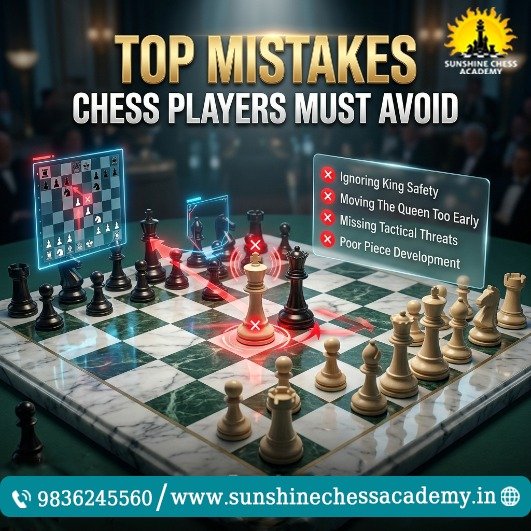
𝐓𝐨𝐩 𝐂𝐡𝐞𝐬𝐬 𝐌𝐢𝐬𝐭𝐚𝐤𝐞𝐬 𝐁𝐞𝐠𝐢𝐧𝐧𝐞𝐫𝐬 𝐌𝐚𝐤𝐞 & 𝐇𝐨𝐰 𝐭𝐨 𝐀𝐯𝐨𝐢𝐝 𝐓𝐡𝐞𝐦 | 𝐒𝐮𝐧𝐬𝐡𝐢𝐧𝐞 𝐂𝐡𝐞𝐬𝐬 𝐀𝐜𝐚𝐝𝐞𝐦𝐲 Meta Description Learn the most common chess mistakes that hold players

♟️ 𝐎𝐧𝐥𝐢𝐧𝐞 𝐯𝐬 𝐎𝐟𝐟𝐥𝐢𝐧𝐞 𝐂𝐡𝐞𝐬𝐬 𝐂𝐨𝐚𝐜𝐡𝐢𝐧𝐠 – 𝐖𝐡𝐢𝐜𝐡 𝐎𝐧𝐞 𝐈𝐬 𝐑𝐢𝐠𝐡𝐭 𝐟𝐨𝐫 𝐘𝐨𝐮? 🏆 Every chess player has a unique learning style. Whether you prefer

♟️ 𝐅𝐫𝐨𝐦 𝐋𝐨𝐜𝐚𝐥 𝐏𝐥𝐚𝐲𝐞𝐫 𝐭𝐨 𝐓𝐨𝐮𝐫𝐧𝐚𝐦𝐞𝐧𝐭 𝐖𝐢𝐧𝐧𝐞𝐫 : 𝐘𝐨𝐮𝐫 𝐂𝐡𝐚𝐦𝐩𝐢𝐨𝐧𝐬𝐡𝐢𝐩 𝐑𝐨𝐚𝐝𝐦𝐚𝐩 𝐒𝐭𝐚𝐫𝐭𝐬 𝐇𝐞𝐫𝐞 ! Every chess champion was once a beginner who chose to learn,
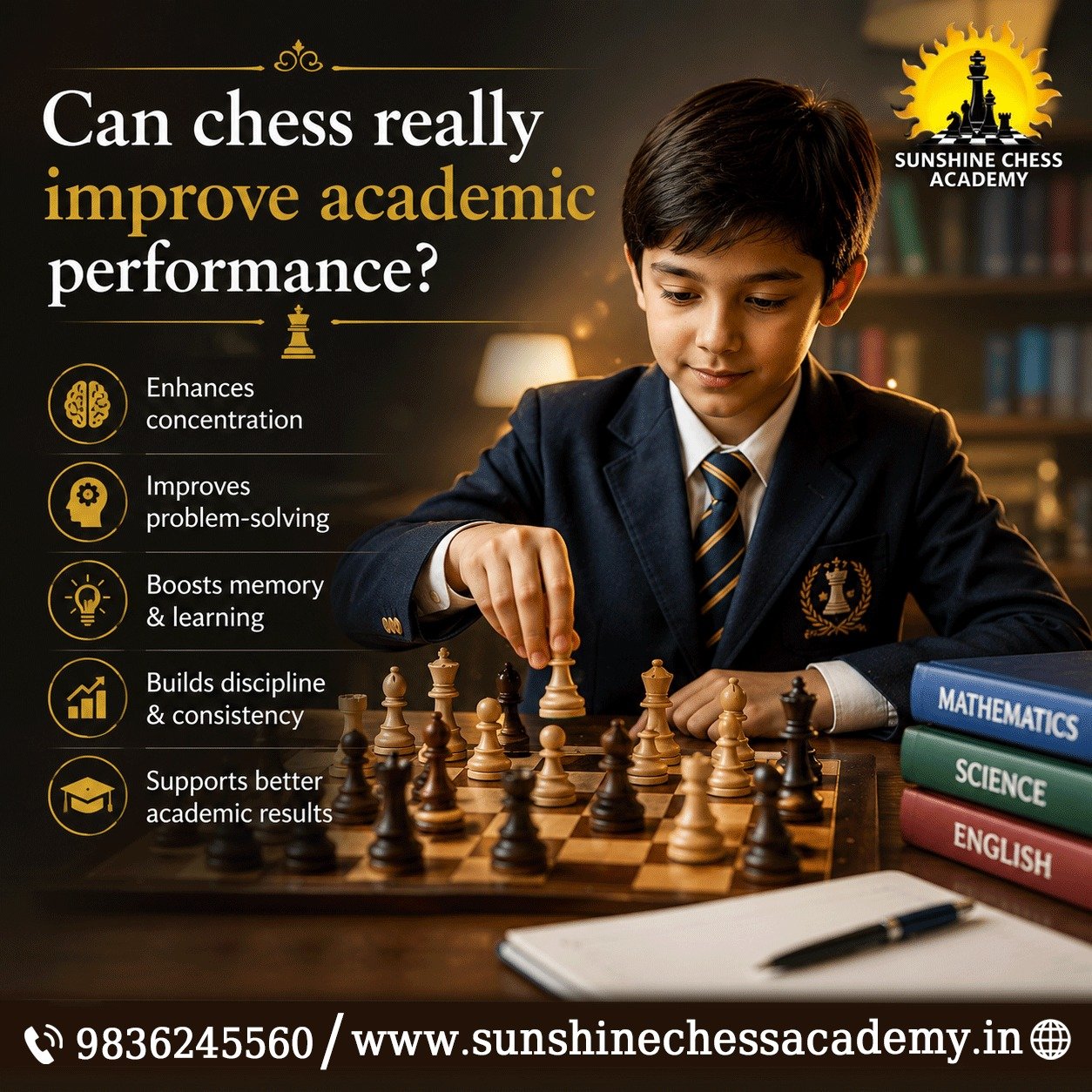
Can Chess Really Improve Academic Performance? Yes, chess training can significantly improve academic performance by enhancing cognitive skills like memory, problem-solving, and concentration. Studies show that children who train in chess—especially in structured programs like those offered by Kolkata’s best chess coaching—often see measurable gains in math, reading, and logical reasoning. For example, research from the University of Chicago found that first graders who played chess scored 20% higher on math tests after just four months of training. Schools in Kolkata incorporating chess into their curriculum have reported similar trends, with students demonstrating better focus and higher grades in STEM subjects. How Does Chess Training Boost Academic Skills? Chess is more than a game—it’s a mental workout that strengthens the same cognitive muscles used in academic learning. Here’s how: 1. Enhances Memory and Retention Chess players must memorize openings, recognize patterns, and recall past games. This exercise improves both short-term and long-term memory, which is critical for subjects like history, languages, and science. A 2023 study published in Nature Human Behaviour found that children who played chess regularly retained 15% more information in vocabulary tests compared to non-players. 2. Develops Critical Thinking and Problem-Solving Every chess move requires evaluating options, predicting outcomes, and adapting strategies—skills identical to those needed in math and science. In Kolkata, chess training programs for kids often integrate these concepts directly into lessons. For instance, students might analyze a chess position as a geometry problem, translating abstract moves into measurable angles and distances. 3. Improves Concentration and Focus Chess demands sustained attention, teaching players to block out distractions—a habit that spills over into classroom settings. A pilot program at Kolkata Education News reported a 30% reduction in classroom disruptions among students who attended weekly chess sessions, with teachers noting improved participation in discussions. 4. Encourages Logical Reasoning Chess follows strict rules, fostering disciplined thinking. Players learn to break down complex problems into smaller, manageable steps, a technique that aligns with problem-solving approaches in physics and computer science. Schools like St. Xavier’s Collegiate School in Kolkata have integrated chess into their STEM curriculum, with students showing a 25% improvement in logical reasoning scores on standardized tests. What the Research Says: Chess Training for Kids While anecdotal success stories abound, rigorous studies provide concrete evidence: Harvard Study (2022): Chess players aged 8–12 showed a 12% increase in standardized math scores after 6 months of training. Stanford Research (2021): Students in chess programs demonstrated a 15% faster response time in cognitive tasks compared to peers. Kolkata School Data (2023): Batch of 50 students at South Point High School improved their average grades by one full letter after 8 weeks of chess coaching. [Embedded YouTube Video: How Chess Boosts Brain Power in Kids] Why Choose Kolkata’s Best Chess Coaching for Academic Growth? Not all chess training programs are created equal. Kolkata’s top coaching centers stand out for several reasons: Expert-Led Training Institutions like the Chess Academy of Kolkata employ FIDE-rated coaches who tailor lessons to age groups. Their curriculum blends chess theory with academic applications, ensuring children see direct benefits in school. Structured Progression Programs follow a step-by-step approach, starting with basic moves and advancing to complex strategies. This mirrors the scaffolding used in academic learning, making it easier for kids to transfer skills. [Internal Link: Explore Our Chess Training Curriculum]
Chess for Kids: A Fun Way to Boost Brainpower and Critical Thinking Chess for kids isn't just a game—it's a powerful tool to enhance cognitive abilities, improve problem-solving skills, and foster creativity. Starting as early as age 4 or 5, children can benefit from learning chess through structured lessons, interactive games, and engaging activities. Studies show that kids who play chess regularly score higher in math, reading, and logical reasoning. Whether your child is a beginner or showing early talent, chess builds confidence, patience, and strategic thinking that lasts a lifetime. Why Should Kids Learn Chess? Introducing chess to kids at a young age offers long-term cognitive and emotional benefits that extend far beyond the board. Here’s why parents and educators are embracing chess as a vital learning tool: 1. Sharpens Problem-Solving Skills: Chess teaches children to analyze situations, think ahead, and make informed decisions. Every move requires evaluating consequences, mirroring real-life challenges. 2. Enhances Memory and Concentration: Memorizing chess openings, tactics, and board patterns strengthens memory and focus. Kids learn to stay attentive during play, a skill that translates to academic settings. 3. Builds Resilience and Patience: Unlike fast-paced video games, chess rewards patience and persistence. Children learn that mistakes are learning opportunities, not failures. 4. Promotes Creativity and Imagination: While chess follows rules, mastering openings like the Italian Game or Sicilian Defense encourages creative play and original strategies. 5. Boosts Confidence Through Achievement: Winning a match or solving a tactical puzzle delivers a sense of accomplishment, motivating kids to set and reach goals. 6. Encourages Sportsmanship and Social Skills: Chess fosters respect, humility, and communication—essential traits for personal and academic success. In a 2022 study published in Frontiers in Psychology, researchers found that children who played chess for at least 12 months showed a 30% improvement in problem-solving and mathematical reasoning compared to their peers. At What Age Should Kids Start Learning Chess? Parents often wonder: “Is my child too young for chess?” The answer is—never too early. While formal instruction typically begins around age 6 to 8, children as young as 4 or 5 can start building foundational skills through simplified games and visual learning. Age-Appropriate Chess Learning Guidelines: Ages 4–5: Use large, colorful chess pieces and teach the names and movements (e.g., “knight jumps in an L-shape”). Play “capture the flag” with pawns to introduce capturing. Focus on fun, not rules. Ages 6–7: Introduce basic rules, checkmate patterns, and simple puzzles. Use storytelling (e.g., “The king is in danger—can you save him?”) to keep engagement high. Ages 8–9: Start teaching openings, endgames, and tactical motifs like forks and pins. Encourage participation in school clubs or online platforms. Ages 10+: Students can dive into advanced strategies, analyze grandmaster games, and participate in tournaments. Many top chess coaches recommend using the “10,000 Hour Rule” concept—starting early gives kids a head start in developing intuitive pattern recognition and calculation skills. How to Teach Chess to Kids: Effective Strategies for Parents and Educators Introducing chess should be joyful, not stressful. Here’s a step-by-step approach to make learning accessible and fun: Start with the Basics Using Visuals Use a physical board with large, tactile pieces to help young learners understand movement. Pair each piece with a relatable analogy: Pawn: The brave “foot soldier” that moves forward one square. Rook: The “castle tower” that moves straight in all directions.
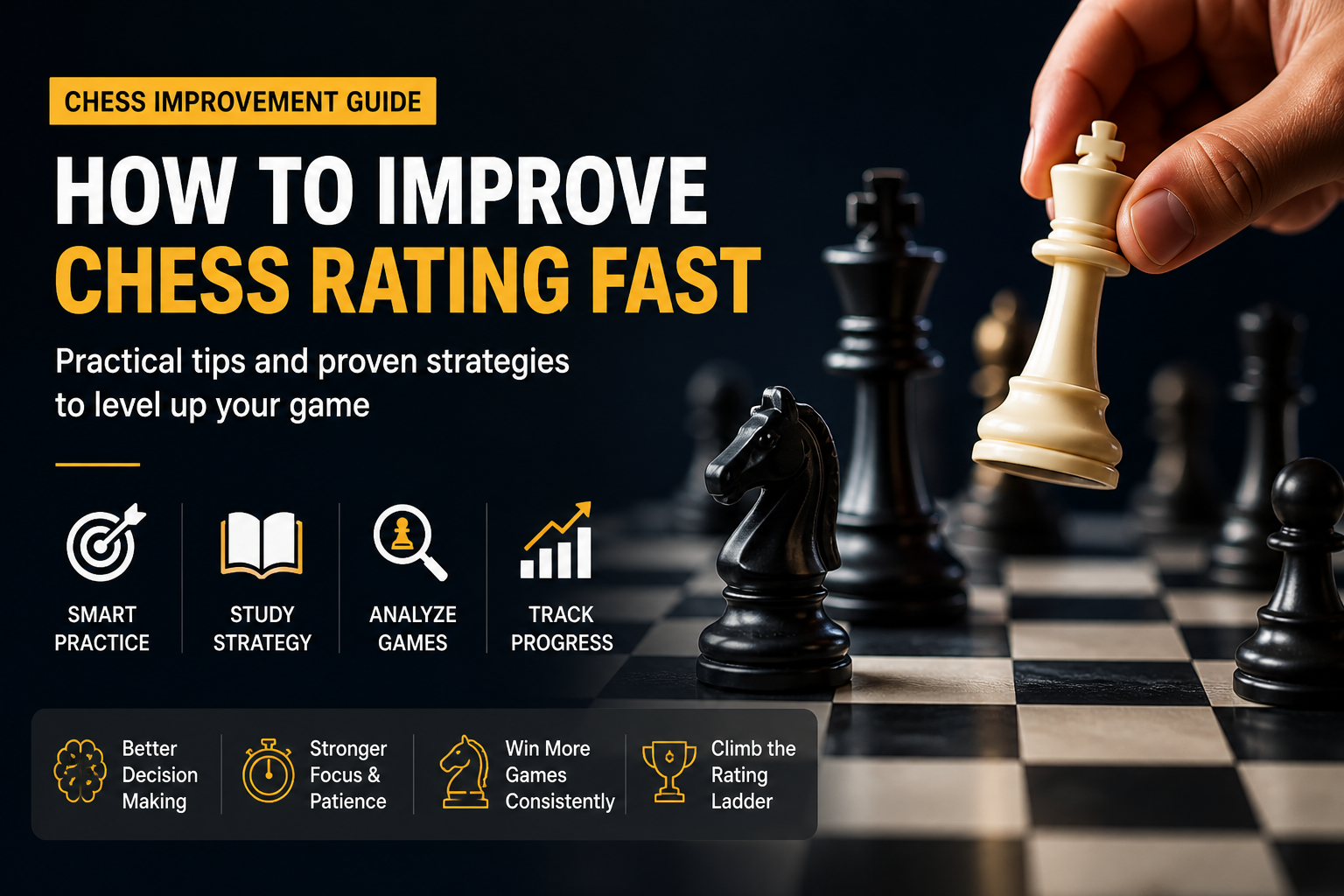
Introduction If you’re serious about chess, one goal stands above the rest—improving your chess rating. Whether you’re a beginner or an intermediate player, the right
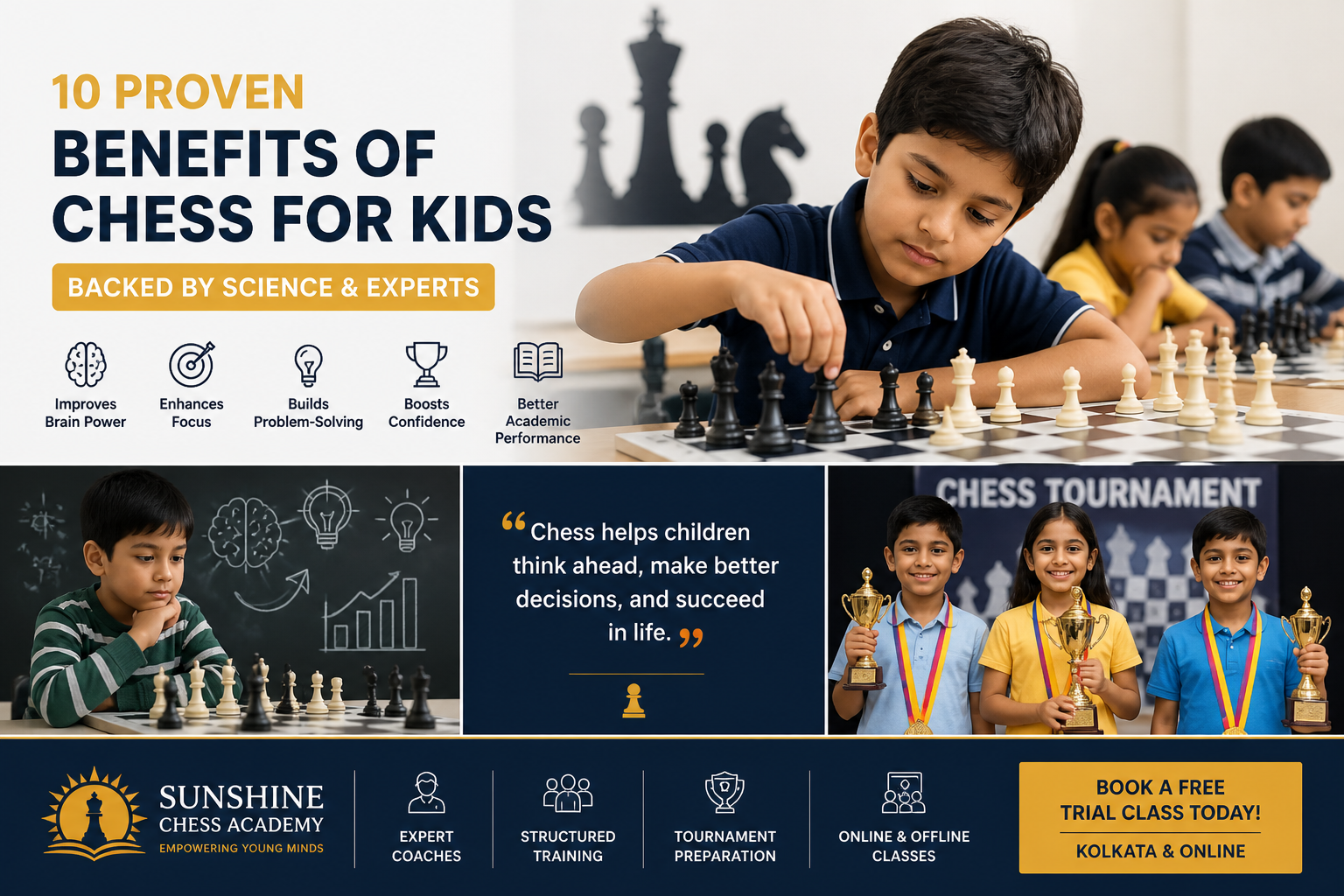
🧠 Introduction Chess is more than just a board game—it’s a powerful tool for developing a child’s brain. Across the world, parents are encouraging their